

Investigate · Treat · Repair · Finish
Damp Proofing Costa Blanca
Damp proofing for villas, fincas, town houses, apartments and underbuilds across the north Costa Blanca — starting with finding out where the water is actually coming from.
Damp is common in Costa Blanca property, and not only in old ones. Traditional fincas, town houses, villas on sloping plots, underbuilds and anything that has been extended or altered over the years can all hold moisture in ways that a coat of paint will never fix.
Dragon Reforms investigates the source of the problem before recommending a treatment. That order matters more than anything else on this page. Damp that looks identical on two walls can have two completely different causes, and the treatment that cures one will do nothing at all for the other.
Moisture can come from the ground, from external walls, from terraces and roofs, from a retaining wall with nothing protecting its buried face, from a plumbing leak, or from condensation forming inside the property. Until you know which, you are guessing.
What is included
Damp Proofing, Start to Finish
From the survey through to the wall being replastered and decorated, by one firm.
Why here
Why Damp Problems Are Common on the Costa Blanca
Plenty of sunshine does not make a property immune from damp.
It is not that the air here is unusually wet. AEMET, the Spanish state meteorological agency, records a mean relative humidity of 66% across the year at its Alicante station, rising to 69–70% through September, October and November. Plenty of northern European homes sit in damper air than that.
What matters is what the moisture in that air meets. Spanish masonry is heavy, largely uninsulated and slow to warm up, so internal surfaces stay cooler than the air around them — and a cool surface is where airborne moisture condenses out. Add a property shut up for weeks at a time with no ventilation, and the autumn peak above arrives in a building with nothing to stop it.
Construction matters just as much. Many older Spanish properties were built quite differently from a modern British house. A traditional finca may have thick masonry or stone walls with no cavity and no damp proof course at all. Villas and town houses often have ground-floor walls, underbuilds or retaining walls sitting in direct contact with the surrounding soil.
Then there is everything that lets water in from outside: cracked rendering, waterproofing that has reached the end of its life, roof defects, terraces over habitable rooms, and joints that were sealed once and never looked at again.
Which is the long way of saying that identifying the source is the first stage of treating damp, not an optional extra before the real work starts.
Rising damp
Rising Damp Treatment
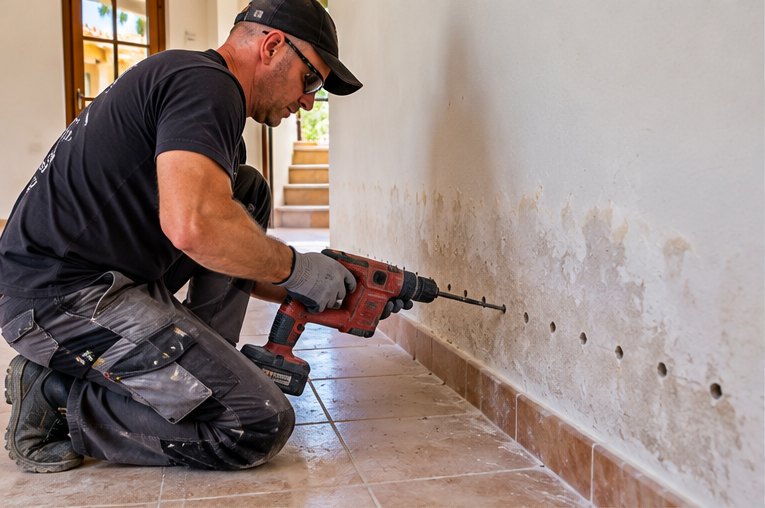
Rising damp is moisture from the ground travelling upwards through porous building materials. It is real, but it is also diagnosed far more often than it actually occurs, which is why the survey comes first.
The signs are usually low down: staining near floor level, plaster breaking down, paint bubbling or flaking away, white salt deposits coming to the surface and a band of persistent moisture along the bottom of the wall that never quite dries out.
Where rising damp is confirmed, we inspect the affected area and recommend a remedial system suited to how that wall is actually built — which on the Costa Blanca is rarely a standard cavity wall. Treatment normally combines a damp-proofing system with removal of contaminated plaster, appropriate re-rendering and the finishing work to put the room back.
The important part is treating the cause. Replastering a wall without dealing with what is wetting it generally buys a year or two, no more.
Hillside plots
Lateral Damp and Retaining Walls
Water does not only travel upwards.
Lateral damp matters here because so much Costa Blanca property is built into a hillside or on a sloping plot. Instead of rising, water penetrates sideways through a wall that has soil or rock against the other side of it.
It affects underbuilds, basements, garages, lower floors, retaining walls, hillside villas and fincas cut into a terrace. The wall can look completely sound from inside while water is standing against its buried face.
What can be done depends heavily on access and on how the wall was built. The options include applied waterproofing systems, tanking from the inside, improving drainage so water is taken away from the wall in the first place, and remedial finishes once the wall is protected.
Where the buried face can be exposed, treating it from outside is usually the stronger answer. Where it cannot, tanking the inside is the practical one.
Fincas
Finca Damp Proofing Specialists
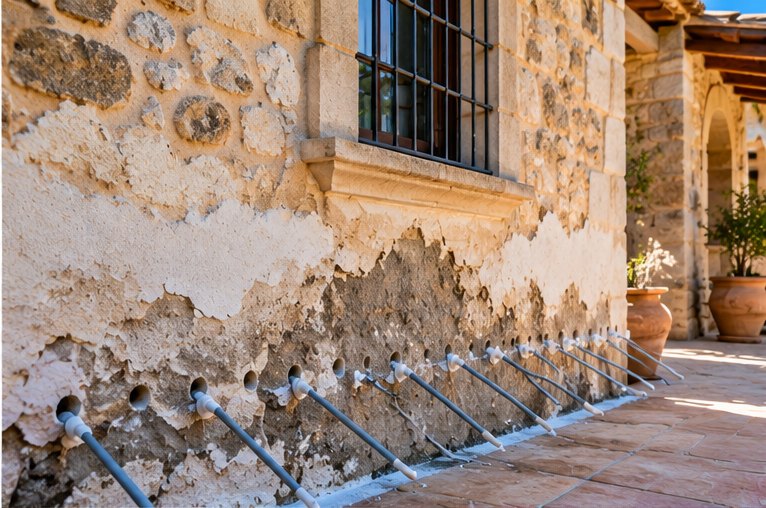
Traditional Spanish fincas are lovely buildings, and their age and construction produce damp problems that behave nothing like those in a modern villa.
Thick masonry, stone construction, old lime render, ground levels that have changed over a century, and whatever previous owners did during earlier renovations all influence how moisture moves through the building.
This is where care is needed. Applying a modern waterproof coating indiscriminately to an old wall can be the wrong move, because the original construction may have been designed to let moisture pass through and evaporate rather than to hold it back. Seal one face of a wall like that and the moisture simply comes out somewhere else, often worse than before.
So we assess the individual property first. And because Dragon Reforms does complete renovations, the damp treatment and the building work that follows — plaster, render, decorating, flooring — are the same job rather than two trades blaming each other.
Town houses
Town House Damp Proofing
Party walls, enclosed rooms and very little through ventilation.
The old town houses in villages across this part of the coast have their own moisture problems, and they are rarely the same as a villa's.
Shared party walls, rooms with only one external wall, ground floors that sit below the level of the street outside, and construction that predates any idea of a damp proof course all play a part. Add a property that is shut up for parts of the year and condensation joins in too.
The problems we get called to look at are usually some combination of damp at floor level, black mould, peeling paint, blown plaster, a musty smell, walls that feel cold or actually wet to the touch, damp patches that appear after rainfall, and moisture tracking around the external walls.
Once we have a view on where it is coming from, we can recommend a treatment — instead of repainting the same wall every spring.
Underbuilds
Underbuild and Basement Tanking
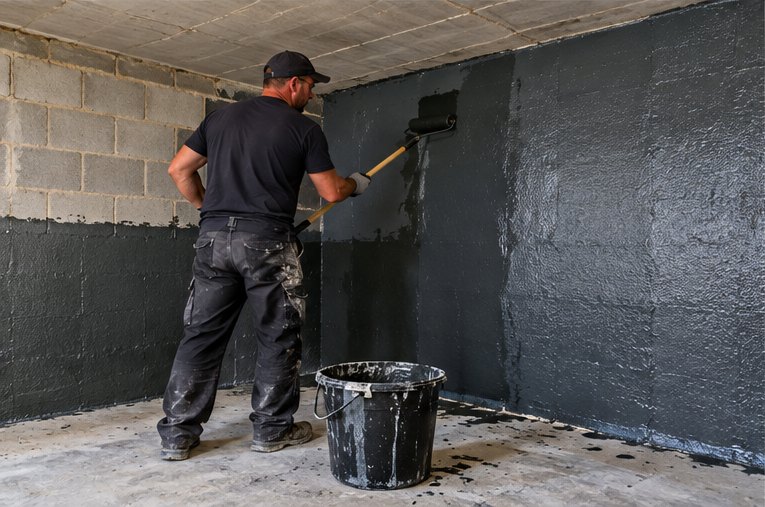
Underbuilds are everywhere in Costa Blanca villas, particularly on sloping plots, and they are the single most common tanking job we are asked about.
Because part of the structure sits below the level of the ground around it, the walls and floor are exposed to moisture in a way the rest of the house is not. A room that was fine as a store becomes a problem the moment somebody wants to live in it.
That is usually the trigger for the call: converting an underbuild into bedrooms, a bathroom, an office, a gym, storage that stays dry, guest accommodation or extra living space.
Our strong advice is that waterproofing forms part of the conversion from the start, not a remedial job eighteen months after the room was finished. Tanking a completed room means taking the finishes back off it.
Penetrating damp
Penetrating Damp
If it gets worse after heavy rain, water is getting in from outside.
That one observation — the patch grows after rain — separates penetrating damp from nearly everything else, and it is the first thing we ask about.
The way in might be cracked exterior render, damaged external walls, a roof defect, failed flashing, a leaking terrace, a window or door that was never properly sealed, defective guttering or drainage, or a waterproof membrane that has simply come to the end of its life.
Finding the entry point is the whole job, because water travels. The damp showing on the inside face of a wall is often nowhere near the defect that let it in — it can run down a cavity, along a beam or across a slab before it appears. Treating the visible patch and ignoring the entry point is why some damp problems keep coming back in a slightly different place each year.
Terraces
Terrace and Patio Waterproofing
Terraces deserve more attention than they usually get, because a tiled terrace can look perfectly sound while the waterproofing underneath it has failed completely.
The tiles are not the waterproof layer. The system beneath them is. When that system deteriorates, the water goes into the structure and the damage turns up in whatever is below — a bedroom ceiling, a garage, an underbuild — often some distance from where it actually got in.
We investigate leaking terraces and patios and carry out the waterproofing and building work that follows. Depending on how it was built, that can mean removing the existing finishes, repairing the substrate underneath, installing a waterproofing system and then reinstating the surface.
It is more work than a coat of sealant. It is also the difference between fixing it and doing it again in two years.
Flat roofs
Flat Roof Waterproofing
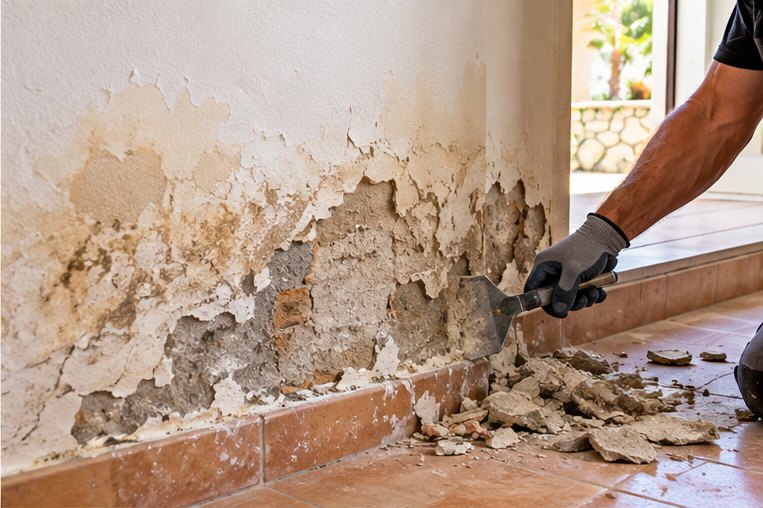
Flat and low-pitched roofs rely entirely on their waterproof layer. There is no pitch to help, so when that layer goes, water goes in.
Cracking, membranes that have aged and gone brittle, outlets that were never sealed properly and surface finishes at the end of their life all let moisture into the structure. On a flat roof over a habitable room, that shows up inside fairly quickly.
We carry out flat roof waterproofing across the north Costa Blanca, including tracing existing leaks, repairing damaged areas and refurbishing surfaces that have deteriorated but are still sound underneath.
Condensation
Condensation and Black Mould
Not every damp-looking wall has rising damp. A good many have condensation.
Condensation happens when moisture in the air meets a surface cold enough for it to condense out. Poor ventilation, bathrooms and kitchens, drying clothes indoors and rooms that stay shut for long periods all push it along.
It is particularly relevant to holiday homes, which is a large part of the housing stock here. A property closed up for weeks or months with no air moving through it will produce condensation whatever the weather is doing outside.
Black mould around windows, in ceiling corners, on external corners of rooms or behind furniture pushed against an outside wall usually points at condensation and ventilation rather than water rising through a wall.
Getting this right matters, because treating condensation as rising damp is money spent on a problem the property does not have — and the mould comes straight back.
External walls
External Wall Waterproofing and Protective Coatings
The outside walls of a Costa Blanca property take a lot: months of strong sun, then periods of wind-driven rain. Render cracks, and once it cracks it lets water into the structure behind it.
We repair damaged exterior surfaces and apply protective coatings and rendering systems as part of a complete damp-proofing solution, rather than as a cosmetic job on its own.
It is usually the point at which the property gets a noticeable improvement in appearance as well, because the defects being repaired are the same ones making it look tired.
Surveys
Find the Cause Before Treating the Damp
The single most useful thing on this page.
This is the part we would ask you to take seriously, because it is what separates a damp treatment that works from one that does not.
Rather than arriving with one particular system to sell, we look at the property and work out where the moisture is most likely coming from. We take account of where the damp is, how the wall is constructed, the ground level outside, the terraces and roof above it, the plumbing, the condition of the exterior render and how the property is ventilated.
From there we can recommend a course of action — which occasionally is that the problem is not what it looked like at all.
Diagnosis → Treatment → Repair → Finishing. Because Dragon Reforms carries out complete property renovations, the building work needed after the damp has been dealt with is part of the same job.
Warning signs
Signs You May Have a Damp Problem
If these keep coming back after redecorating, something underneath is still wet.
- Black mould
- Musty or damp smells
- Paint bubbling or peeling
- Crumbling plaster
- Damp patches on walls
- White salt deposits
- Moisture around skirting boards
- Damp appearing after rainfall
- Mould behind furniture
- Cold or wet-feeling walls
- Staining on ceilings
- Damp in underbuilds or garages
Any one of them on its own may be nothing much. Several of them together, in the same place, usually means the wall is telling you something.
The work
Damp Proofing and Renovation Work
Investigation, treatment and the building work that puts the room back.
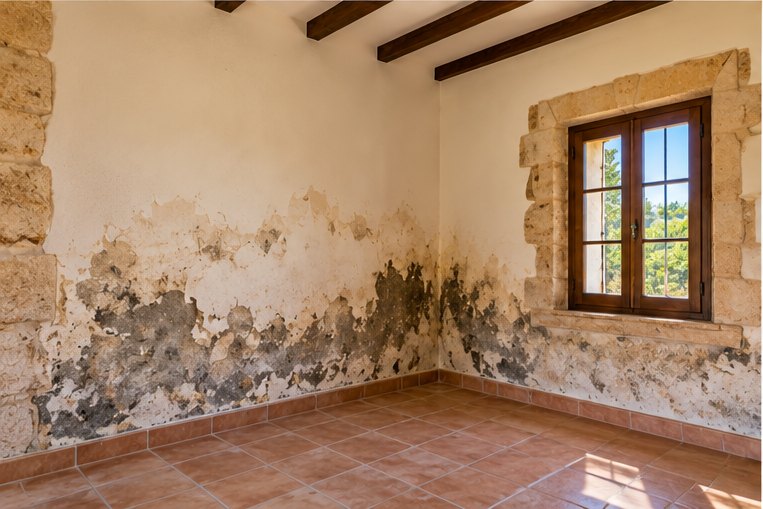

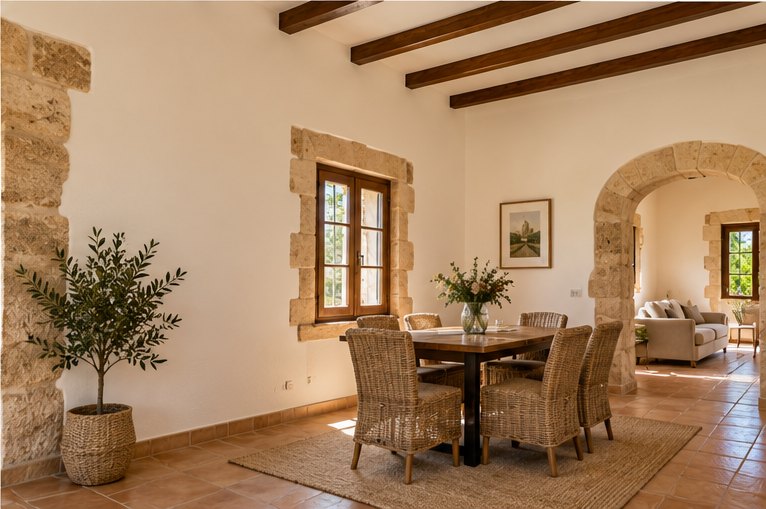
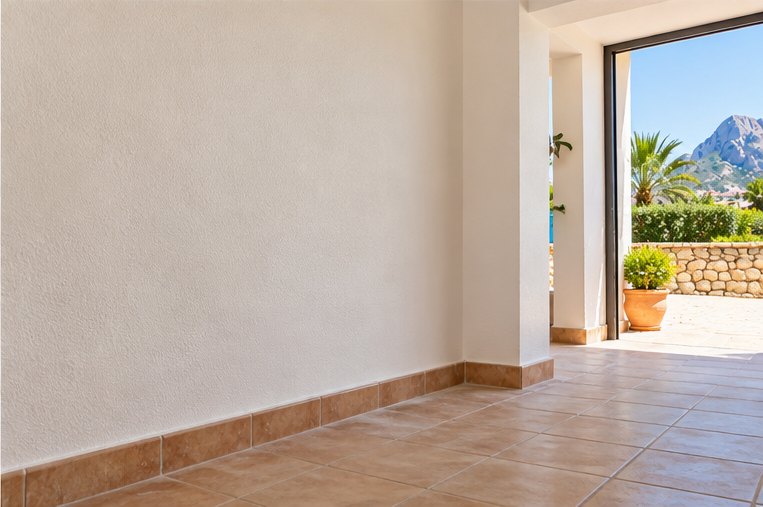
Images are for illustration purposes only.
Areas
Damp Proofing Across the North Costa Blanca
Nine towns with their own pages, because the property in each one is different.
Rather than a single page with a list of town names stuffed into it, each of these covers the property that town actually has — hillside underbuilds, old town houses, seafront apartments or fincas on the terraces.
Damp Proofing Calpe
Damp surveys, waterproofing and remedial building work in Calpe and the surrounding area.
View Calpe →Damp Proofing Altea
Damp surveys, waterproofing and remedial building work in Altea and the surrounding area.
View Altea →Damp Proofing Benidorm
Damp surveys, waterproofing and remedial building work in Benidorm and the surrounding area.
View Benidorm →Damp Proofing La Nucía
Damp surveys, waterproofing and remedial building work in La Nucía and the surrounding area.
View La Nucía →Damp Proofing Finestrat
Damp surveys, waterproofing and remedial building work in Finestrat and the surrounding area.
View Finestrat →Damp Proofing Villajoyosa
Damp surveys, waterproofing and remedial building work in Villajoyosa and the surrounding area.
View Villajoyosa →Damp Proofing Alfaz del Pi & Albir
Damp surveys, waterproofing and remedial building work in Alfaz del Pi & Albir and the surrounding area.
View Alfaz del Pi & Albir →Damp Proofing Polop
Damp surveys, waterproofing and remedial building work in Polop and the surrounding area.
View Polop →Damp Proofing Callosa d'en Sarrià
Damp surveys, waterproofing and remedial building work in Callosa d'en Sarrià and the surrounding area.
View Callosa d'en Sarrià →Damp Proofing Benissa
Damp proofing in Benissa for old town houses, countryside fincas and coastal villas: diagnosis first, then treatment, repair and finishing. Free quotation.
View Benissa →Damp Proofing Albir
Damp proofing in Albir for holiday apartments and hillside villas: closed-up flats, terrace leaks, mould and lower floors, diagnosed first. Free quotation.
View Albir →Why choose us
Why Dragon Reforms
Dragon Reforms has been renovating property on the Costa Blanca since 1999, and damp proofing sits inside that rather than alongside it.
It means we can look past the visible damp patch at the building problem behind it, and then carry out the work that follows — waterproofing, rendering, plastering, tiling, decorating and refurbishment — without handing you between trades who each blame the one before.
Our office is in Callosa d'en Sarrià, so the towns on this page are genuinely local to us rather than a list copied off a map.
- Local Costa Blanca experience since 1999
- Finca, villa and town house specialists
- Damp investigation and diagnosis first
- Waterproofing and tanking
- Terrace, patio and flat roof solutions
- Rendering and remedial building work
- Complete renovation service
- Guaranteed work
Questions
Damp Proofing Costa Blanca — Frequently Asked Questions
What causes damp in Costa Blanca properties?
There is no single cause, which is the whole point of surveying first. Moisture may come from the ground, from rainwater penetrating the structure, from terraces or roofs, from retaining walls, from plumbing, or from condensation inside the property. The correct treatment depends entirely on which of those it turns out to be.
Can you treat damp in an old Spanish finca?
Yes. Fincas are assessed according to how they are actually built. Old stone and masonry walls behave differently from modern cavity construction, and a coating that suits one can be the wrong choice on the other, so the finca is looked at on its own terms.
Why does mould appear during the winter in Spain?
Because condensation depends on the temperature of the surface, not just the humidity of the air. Heavy uninsulated masonry stays cool, so in winter the moisture in the air condenses on it. Coastal Alicante also runs at its most humid in autumn - AEMET records 69 to 70% at its Alicante station from September to November - which is when the problem usually starts to show.
Can you waterproof an underbuild?
Yes. Depending on how it is built and where the moisture is coming from, tanking and other waterproofing systems can be used as part of an underbuild conversion. It is far better done as part of the conversion than added afterwards.
Can water really come through a tiled terrace?
Yes, and it often does. The tiles are not the waterproofing layer. When the system beneath the finished surface fails, water can reach rooms, garages or underbuilds below while the terrace itself still looks perfectly sound.
Do you repair the walls after treating the damp?
Yes. Dragon Reforms carries out the associated building and renovation work, including rendering, plaster repairs, decorating and other finishing, so you get a finished room back rather than a treated wall.
Should I just use damp-proof paint?
A coating has its uses in the right circumstances. Applied to a wall without identifying what is wetting it, though, it tends to hide the symptom for a while rather than solve anything - and on some older walls sealing one face makes matters worse.
Can you investigate a damp problem before deciding on treatment?
Yes, and that is the sensible starting point. Different types of moisture need different solutions, so establishing which one you have comes before choosing what to do about it.
Which areas do you cover for damp proofing?
Benidorm, Altea, Calpe, La Nucia, Finestrat, Villajoyosa, Alfaz del Pi and Albir, Polop and Callosa d'en Sarria, along with the surrounding north Costa Blanca. The office is in Callosa d'en Sarria.
Is the damp proofing work guaranteed?
Yes. Dragon Reforms guarantees its work. The scope of what is covered is set out with your quotation, because it depends on which treatment the property actually needs.
Get in touch
Solve the Cause, Not Just the Damp Patch
If you have damp, mould, peeling paint, water penetration or a musty smell that will not go away, we will come and look at it, tell you what we think is causing it and recommend something proportionate.
Villa, finca, town house, apartment or underbuild — across Benidorm, Altea, Calpe, La Nucía, Finestrat, Villajoyosa, Alfaz del Pi, Albir, Polop and Callosa d'en Sarrià.
More from Dragon Reforms
More Dragon Reforms Services
One firm for the whole job, from the first survey to the finished room.
- Property Renovations Costa Blanca
- Kitchens Costa Blanca
- Bathrooms Costa Blanca
- Villa Renovations Costa Blanca
- Apartment Reforms Costa Blanca
- Finca Renovations Costa Blanca
- Builders Costa Blanca
- Terraces & Outdoor Works Costa Blanca
- Plumbing Costa Blanca
- Electrics Costa Blanca
- Carpentry Costa Blanca
- Painting & Plastering Costa Blanca
- Windows & Doors Costa Blanca
- Air Conditioning Costa Blanca
- Disability Living Costa Blanca
Get a quote
Get Your Free Damp Survey and Quotation
Tell us where the damp is and what the property is. We will come and look at it, and the survey and quotation cost you nothing.
- Phone
- 0034 639917798
0034 669261858 - +34 639 91 77 98
- dragonreforms@gmail.com
- Address
- Calle San Isidre No 8, Pl 1 Dr
03510 Callosa de Ensarrià, Alicante - Hours
- Monday to Saturday, 9am–8pm